The Ultimate Guide to Selecting and Installing Linear Rails for Your CNC Build
Linear rails are the backbone of any high-performance CNC machine. They provide the precision, rigidity, and smooth motion necessary for high-quality cuts and long-term reliability. Whether you’re building a DIY router or upgrading an existing machine, choosing the right linear rails is one of the most critical decisions you’ll make.
In this guide, we’ll walk you through everything you need to know about selecting and installing linear rails for your CNC build.
Why Linear Rails Matter
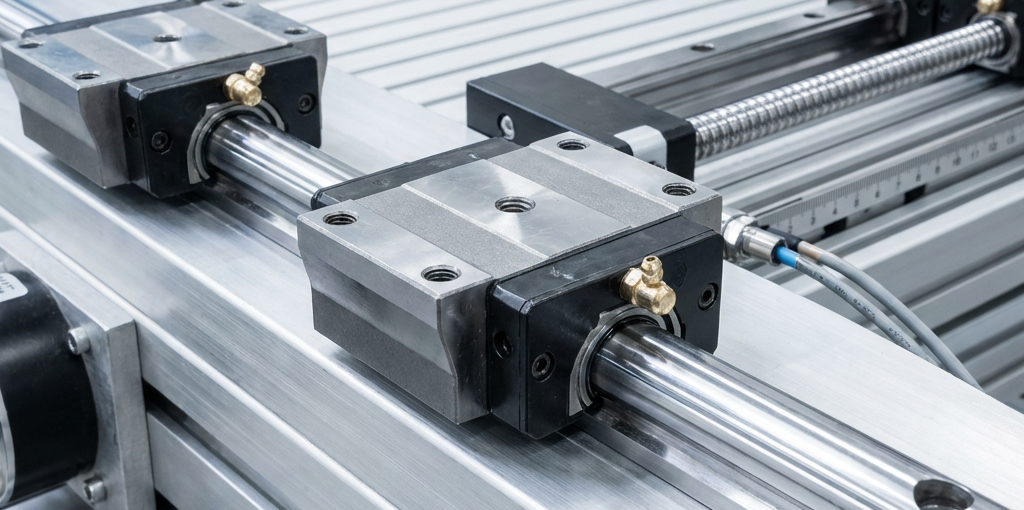
Linear rails (also known as linear guides) are designed to carry heavy loads while maintaining extreme precision. Unlike round shafts or V-wheel systems, profiled linear rails offer:
- Higher Rigidity: Minimal deflection under cutting forces.
- Superior Precision: Tolerances often measured in microns.
- Longevity: Designed for millions of cycles with proper maintenance.
- Smooth Motion: Recirculating ball bearings reduce friction to near zero.
1. Choosing the Right Type of Linear Rail
Profiled vs. Round Rails
For most CNC applications, profiled linear rails (like the ones from HIWIN or CPC) are the gold standard. They consist of a square rail with a matching carriage block.
Round rails are more affordable but lack the rigidity and load-bearing capacity of profiled rails. They are suitable for light-duty machines or 3D printers but are generally avoided for CNC routers cutting hard materials like aluminum or hardwoods.
Selecting the Size (Width)
Linear rails are sized by their width in millimeters. Common sizes for CNC builds include:
- 15mm (e.g., HGR15): Ideal for small desktop machines and 3D printers.
- 20mm (e.g., HGR20): The “sweet spot” for most hobbyist and professional CNC routers. Offers excellent rigidity without excessive weight.
- 25mm+ (e.g., HGR25): Used for large industrial machines or when extreme rigidity is required.
2. Preload and Precision Classes
When buying linear rails, you’ll encounter “Preload” and “Precision Classes.”
- Preload: This is the internal tension between the bearings and the rail. For CNC routers, a light preload (ZA) or medium preload (ZB) is recommended to eliminate any “play” or backlash in the system.
- Precision Class: Most hobbyists will find Normal (N) or High (H) class rails perfectly adequate. Industrial applications might require Precision (P) or Super Precision (SP).
3. Installation Guide: Step-by-Step
Proper installation is just as important as the quality of the rails themselves. Even the best rails will perform poorly if they aren’t parallel or level.
Step 1: Prepare the Mounting Surface
Ensure your mounting surface (usually aluminum extrusions or a machined steel plate) is clean and flat. Any debris or high spots will cause the rail to bind.
Step 2: Set the Master Rail
Choose one rail to be your “Master.” Bolt it down loosely, then use a dial indicator or a precision straightedge to ensure it is perfectly straight before torquing the bolts to the manufacturer’s specification.
Step 3: Align the Slave Rail
The second rail (the “Slave”) must be perfectly parallel to the master. A common trick is to use the CNC’s gantry itself as a jig. Move the gantry to one end, tighten the slave rail bolts, then move it to the other end and repeat.
Step 4: Lubrication
Before your first move, ensure the carriage blocks are properly lubricated. Most blocks come with a light oil for shipping, but they require proper grease (like lithium-based grease) for operation.
4. Maintenance for Longevity
To keep your linear rails running smoothly for years:
- Keep them clean: Use dust boots or bellows to protect the rails from wood chips and metal shavings.
- Wipe down regularly: Use a clean, lint-free cloth to remove old grease and debris.
- Re-grease: Check the lubrication every 100-200 hours of run time.
Conclusion
Investing in high-quality linear rails like the HGR series is the single best way to ensure your CNC build is capable of professional-grade work. By selecting the right size and taking the time for a precise installation, you’ll have a machine that is fast, accurate, and built to last.
Ready to start your build? Check out our selection of High-Precision Linear Rails at CNC Parts Market.