Understanding CNC Tolerances: How to Achieve Industrial-Grade Precision
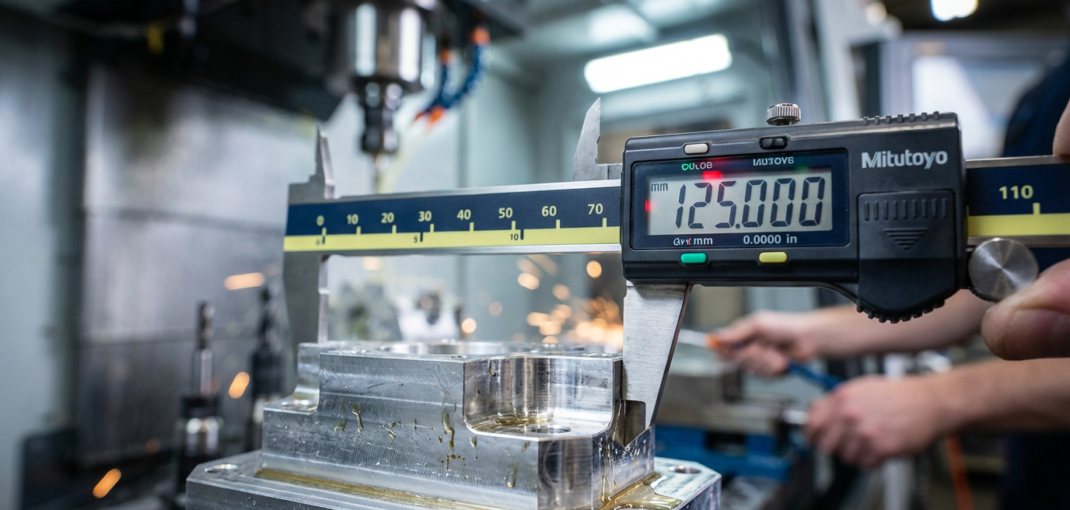
In the world of CNC machining, the difference between a part that fits and a part that fails is often measured in thousandths of an inch. This margin of error is called tolerance.
Whether you’re making furniture or aerospace components, understanding and managing tolerances is critical for anyone operating a CNC router or mill.
What is a Tolerance?
A tolerance is the acceptable limit of variation in a physical dimension. No machine is perfect, and every part will have some degree of error.
Example: If you’re cutting a slot for a 1/2″ (0.500″) thick piece of plywood, you might specify a tolerance of ±0.005″. This means the slot could be as narrow as 0.495″ or as wide as 0.505″ and still be considered “good.”
Why Tolerance Matters
- Fit and Function: Parts that need to be assembled (like mortise and tenon joints) must have complementary tolerances.
- Manufacturing Costs: The tighter the tolerance (e.g., ±0.001″ vs ±0.010″), the more expensive the part is to produce. It requires better machines, slower speeds, and more frequent tool changes.
- Material Behavior: Wood, plastics, and metals all react differently to heat and humidity, which affects their “achievable” tolerance.
Factors Influencing CNC Tolerance
| Factor | Description | Impact on Tolerance |
|---|---|---|
| Machine Rigidity | How much the machine flexes under load. | High-quality steel frames have lower flex and tighter tolerances. |
| Tool Deflection | The slight bending of the router bit when cutting. | Longer, thinner bits have more deflection, leading to looser tolerances. |
| Backlash | The “slop” in the lead screws or rack and pinion gears. | High-precision ball screws (like those on cncpartsmarket.com) minimize backlash. |
| Stepper/Servo Precision | The resolution of the motors moving the axes. | Servos with encoders offer higher accuracy and better repeatability. |
| Thermal Expansion | Heat from the spindle or friction can cause parts to grow. | Water-cooled spindles help maintain thermal stability. |
Tips for Achieving Tighter Tolerances
To get industrial-grade precision from your CNC router, implement these best practices:
1. Optimize Your Toolpaths
- Roughing and Finishing Passes: Never cut to final dimensions in one go. Leave 0.015″ (0.4mm) of material for a final, light “finishing pass” at a slower feed rate. This reduces tool deflection.
- Climb vs. Conventional Milling: For finishing passes, Climb Milling often yields a better finish and more accurate dimensions in most materials.
2. Calibrate Your Machine
- Steps per Unit: Use a high-precision dial indicator to measure actual movement vs. commanded movement. Update your controller software (e.g., Mach3/4, GRBL) accordingly.
- Tram Your Spindle: Ensure the spindle is perfectly perpendicular to the bed. If it’s tilted, your “flat” bottom cuts will actually be slightly scalloped (ridged).
3. Use Quality Components
- Rigid Spindles: A high-speed spindle with high-quality bearings (P4 or better) will have less “runout”—the wobbling of the bit as it spins.
- Solid Workholding: Any movement of the workpiece during the cut will ruin your tolerances. Vacuum tables or high-pressure clamps are essential.
Conclusion
Understanding tolerances is the first step in moving from a hobbyist to a professional maker. By knowing the limits of your machine and your materials, you can design parts that fit perfectly every time.
Need to upgrade your machine for better precision? Check out our selection of high-precision ball screws and water-cooled spindles at cncpartsmarket.com!