The Role of Limit Switches and Homing Sensors in CNC Reliability
In CNC machining, precision and safety are paramount. Two components that play a critical role in ensuring both are limit switches and homing sensors. While often overlooked, these sensors act as the machine’s eyes and safety net, preventing costly damage and ensuring consistent part accuracy.
In this article, we’ll explore the functions of these sensors and why they are essential for any reliable CNC setup.
1. What are Homing Sensors?
Homing sensors define the machine’s “Home” or zero position—the fixed reference point for the machine’s coordinate system (Machine Zero).
When you start your CNC machine, the controller doesn’t automatically know where the spindle is located. The “homing” process moves each axis until it triggers the homing sensor. Once triggered, the controller sets that position as (0, 0, 0) for the machine. This allows you to:
- Consistent Setup: Return to the exact same position after a power failure or tool change.
- Fixture Offsets: Use G54-G59 work offsets reliably, as they are based on the machine’s zero.
- Repeatability: Run the same job multiple times with identical results.
2. What are Limit Switches?
Limit switches are safety devices positioned at the ends of each axis’s travel. Their primary purpose is to stop the machine before it “crashes” into its own frame.
When an axis travels too far and hits a limit switch, the controller immediately cuts power or stops motion (an E-Stop event). This prevents:
- Mechanical Damage: Stripping ball screw nuts, bending lead screws, or breaking motor mounts.
- Belt Stretching: On belt-driven machines, preventing the belt from jumping teeth or snapping.
- Operator Safety: Reducing the risk of flying debris from a high-speed crash.
3. Different Types of Sensors
Choosing the right sensor depends on your machine’s environment and your budget.
Mechanical Limit Switches
These are the most common and affordable. They consist of a physical lever or button that is clicked by the moving axis.
- Pros: Simple to wire, cheap, no power supply needed.
- Cons: Can fail due to dust/debris, mechanical wear over time.
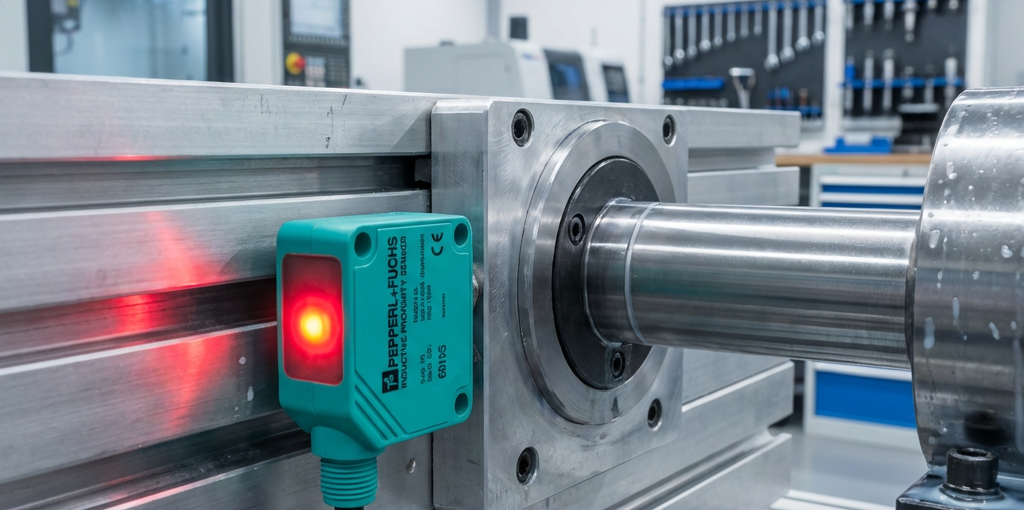
Proximity Sensors (Inductive)
These detect metal objects without physical contact.
- Pros: Highly reliable, immune to dust and coolant, no moving parts.
- Cons: Require a power source (usually 5V-24V), only detect metal.
Optical Sensors
Use a beam of light to detect the axis.
- Pros: High precision, no contact.
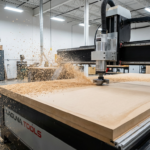
- Cons: Very sensitive to dust and smoke (common in wood routing).
4. Wiring and Configuration
Reliability starts with proper wiring. The most common pitfall is Electromagnetic Interference (EMI).
- Use Shielded Cable: Like your VFD wiring, sensor wires should be shielded to prevent false triggers from motor noise.
- Normally Closed (NC) vs. Normally Open (NO): Most professionals recommend Normally Closed wiring. In an NC circuit, if a wire breaks, the machine will stop (failing safely). In an NO circuit, a broken wire would prevent the switch from ever triggering.
- Soft Limits: Once you have homing sensors working, you can set “Soft Limits” in your controller software (like Mach3 or GRBL). This provides a secondary layer of protection without needing a physical switch at every end.
Conclusion
Limit switches and homing sensors are small investments that offer massive peace of mind. By providing a reliable reference point and a safety buffer against crashes, they allow you to push your machine to its limits with confidence.
Looking for high-quality sensors for your CNC? Explore our range of CNC sensors and switches at CNC Parts Market!