The Rise of Handheld Fiber Laser Welding Machines in Modern Manufacturing
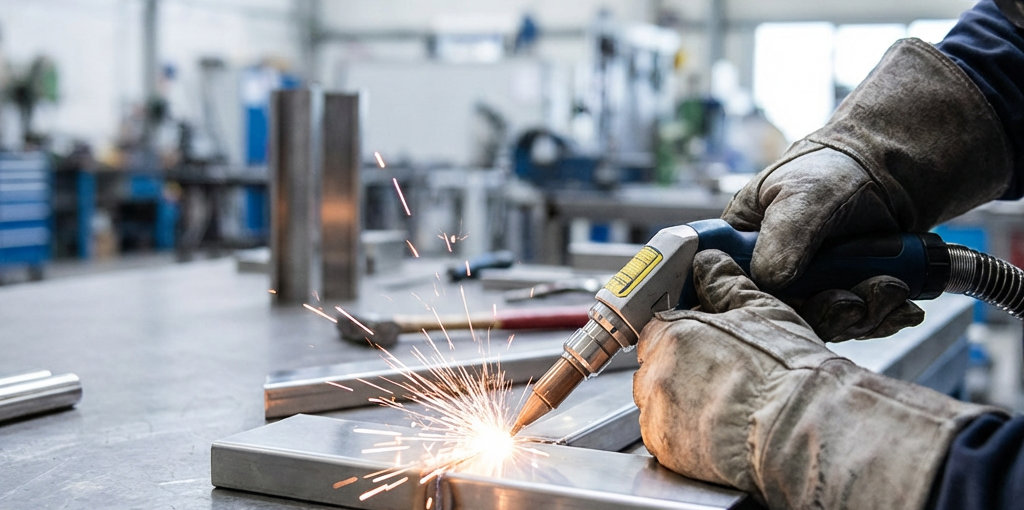
For decades, laser welding was a stationary, complex, and expensive process. However, the introduction of handheld fiber laser welding machines has revolutionized the industry, bringing the precision of laser technology to a portable and easy-to-use format.
What is Handheld Fiber Laser Welding?
Unlike traditional MIG or TIG welding, which use an electric arc to melt materials, fiber laser welding uses a highly concentrated beam of light. A handheld unit allows the operator to manually guide this beam, combining the flexibility of manual welding with the superior speed and quality of laser technology.
Key Advantages of Handheld Laser Welding
1. Superior Speed and Efficiency
Laser welding is typically 2 to 10 times faster than traditional TIG welding. This massive increase in productivity allows manufacturers to complete more jobs in less time, directly impacting the bottom line.
2. High Quality and Minimal Distortion
The heat-affected zone (HAZ) in laser welding is much smaller than in arc welding. This results in minimal thermal distortion, meaning the final product requires far less grinding, polishing, or post-processing.
3. Ease of Use
While TIG welding requires years of practice to master, an operator can become proficient with a handheld laser welder in just a few days of training. The intuitive interface and ergonomic design make it accessible to a wider range of workers.
4. Versatility Across Materials
These machines excel at welding a wide range of materials, including:
- Stainless steel
- Carbon steel
- Aluminum
- Galvanized sheet
- Brass and copper (with proper settings)
How It Compares to Traditional Welding
| Feature | TIG/MIG Welding | Handheld Laser Welding |
|---|---|---|
| Speed | Slow | 2-10x Faster |
| Skill Level | Very High | Moderate |
| Heat Impact | High Distortion | Minimal Distortion |
| Post-Processing | Extensive Grinding | Little to None |
| Safety | UV/Sparks | Laser Radiation (requires shielding) |
Safety Considerations
While handheld laser welders are remarkably efficient, they require strict safety protocols. Operators must wear specialized laser safety goggles and work in a controlled environment to prevent eye damage or skin burns from reflected beams.
Conclusion
Handheld fiber laser welding is no longer a futuristic concept—it is a practical, cost-effective reality for modern manufacturing shops. By significantly increasing speed and reducing post-processing time, these machines are quickly becoming a must-have tool for any competitive metalworking business.
Interested in upgrading your shop with the latest welding technology? Visit CNC Parts Market to browse our selection of handheld fiber laser welders and accessories.