The Importance of Regular Spindle Lubrication for CNC Longevity
In the world of high-precision CNC machining, the spindle is the heart of your operation. It’s the component that rotates at thousands of revolutions per minute, often for hours on end. For such a high-speed, high-stress part, lubrication is not just a maintenance task—it’s a critical factor in the lifespan and performance of your machine.
Whether you’re using a water-cooled or an air-cooled spindle, proper lubrication is the single best way to protect your investment and ensure consistent machining accuracy.
1. Why Spindle Lubrication is Essential
Lubrication performs several vital functions within a CNC spindle:
- Friction Reduction: By creating a thin film of oil or grease between moving parts (like the precision bearings), it minimizes direct metal-to-metal contact, reducing wear.
- Heat Dissipation: While the cooling system (water or air) handles the main cooling, lubrication helps carry heat away from the friction points, preventing localized overheating that can cause bearing failure.
- Corrosion Protection: A proper lubricant provides a protective barrier against moisture and environmental contaminants, preventing rust on the highly polished internal surfaces.
- Noise Reduction: A well-lubricated spindle runs more quietly and with less vibration, which translates directly to a better surface finish on your machined parts.
2. Choosing the Right Lubricant
Not all lubricants are created equal. Using the wrong type can be just as damaging as using none at all.
- Consult the Manufacturer: Always start by checking your spindle’s technical manual. The manufacturer will specify the exact grade and type of lubricant required.
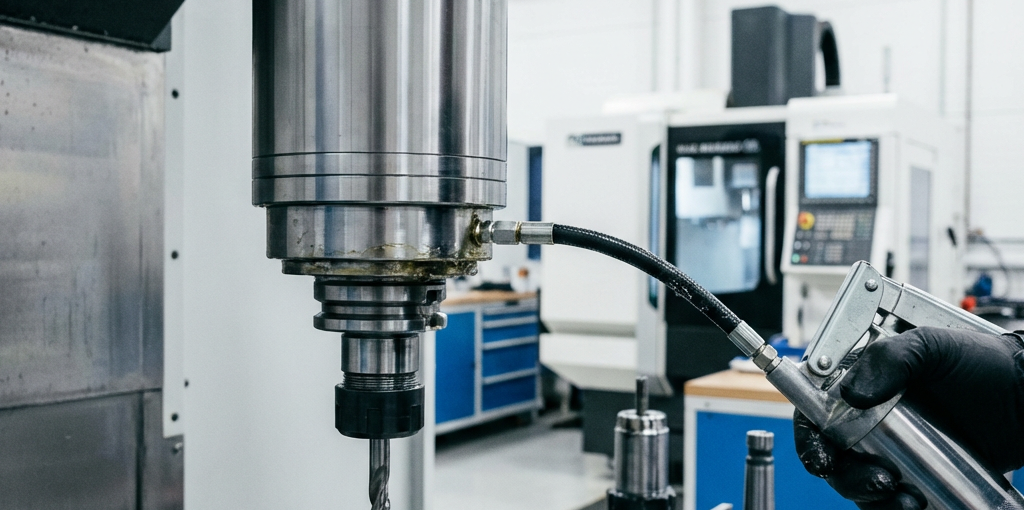
- Grease vs. Oil: Many modern high-speed spindles are “greased for life” at the factory. However, others—particularly those with automatic tool changers or older designs—may require manual greasing or have an automated oil-mist lubrication system.
- Quality Matters: Use high-quality, high-speed spindle greases or oils (like those from Mobil, Klüber, or specialized CNC brands). These are formulated to maintain their viscosity even at high temperatures and centrifugal forces.
3. Regular Maintenance Schedule
To keep your spindle in top condition, establish a regular lubrication routine:
- Daily: Inspect for any unusual noise or vibration during the warm-up routine. Check for any visible oil leaks or dry spots.
- Weekly: For spindles requiring manual lubrication, check the grease or oil levels. Clean the external surfaces to prevent dust and debris from entering the lubrication points.
- Quarterly/Yearly: If your spindle is not “greased for life,” perform a deeper inspection and replenishment as per the manufacturer’s guidelines.
4. Signs of Poor Lubrication
If you notice any of the following, your spindle may be suffering from inadequate lubrication:
- Increased Operating Temperature: If the spindle housing feels significantly hotter than usual, it’s a sign of excessive internal friction.
- Unusual Grinding or Screeching Noises: This indicates that the bearings are no longer being properly cushioned.
- Loss of Dimensional Accuracy: Worn bearings lead to spindle “runout,” making your cuts less precise.
- Sudden Stalling: Extreme friction can eventually cause the spindle to seize entirely.
Conclusion
The spindle is the most expensive and critical component of your CNC machine. By dedicating just a few minutes each week to proper lubrication and maintenance, you can extend its life by years and maintain the precision your business depends on.
Need replacement parts or professional spindle maintenance tools? Explore our CNC Spindle and Accessories Collection for high-quality components and expert support.