CO2 vs. Fiber Laser: Which One is Right for Your Business?
Choosing between a CO2 and a fiber laser is one of the most critical decisions for a business in the CNC and manufacturing industry. Each technology has its unique strengths, and the right choice depends on your materials, production goals, and budget.
What is a CO2 Laser?
CO2 (Carbon Dioxide) lasers use a gas mixture to produce a laser beam. They are known for their versatility, particularly when it is about non-metallic materials.
Key Advantages:
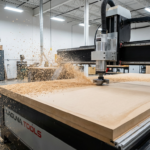
- Material Versatility: They excel at cutting and engraving wood, acrylic, glass, leather, and some plastics.
- Cost-Effective for Beginners: Generally, CO2 lasers have a lower upfront cost than fiber lasers, making them accessible for startups and hobbyists.
- Thick Material Performance: While fiber lasers are faster on thin metals, CO2 lasers can often provide a cleaner cut on thicker organic materials.
What is a Fiber Laser?
Fiber lasers use an optical fiber cable as the gain medium. They are the powerhouse of the modern metalworking industry.
Key Advantages:
- Speed on Thin Metals: Fiber lasers are significantly faster (up to 3-5 times) when cutting thin metals (under 5mm).
- Low Maintenance: They have fewer moving parts and no fragile mirrors, leading to much lower maintenance requirements.
- Energy Efficiency: Fiber lasers convert electricity to laser light more efficiently, reducing operating costs.
- Reflective Metals: They can safely cut reflective metals like brass, copper, and aluminum, which can damage CO2 lasers.
Direct Comparison
| Feature | CO2 Laser | Fiber Laser |
|---|---|---|
| Best For | Wood, Acrylic, Leather, Textiles | Stainless Steel, Carbon Steel, Aluminum, Brass |
| Speed | Fast on thick organics | Extremely fast on thin metals |
| Maintenance | High (mirrors, gas refilling) | Low (solid-state) |
| Operating Cost | Higher | Lower |
| Service Life | 10,000 – 20,000 hours | 100,000+ hours |
Which One Should You Choose?
Choose a CO2 Laser if:
- You primarily work with wood, acrylic, or other non-metallic materials.
- You are starting a hobbyist shop or a small-scale engraving business.
- Your budget is tight and you don’t need high-speed metal production.
Choose a Fiber Laser if:
- You are focused on industrial-scale metal cutting or welding.
- You need to cut reflective metals like brass or copper.
- You want a machine with minimal maintenance and high uptime.
- You are looking for long-term ROI through energy savings and speed.
Conclusion
Both CO2 and fiber lasers have their place in the modern machine shop. If you’re looking for versatile craftsmanship with organics, the CO2 laser remains king. However, for high-speed, low-maintenance metal fabrication, the fiber laser is the clear winner.
Still unsure? Contact our experts at CNC Parts Market to find the perfect machine for your specific needs.