Understanding Laser Cutting Gas: When to Use Oxygen, Nitrogen, or Air
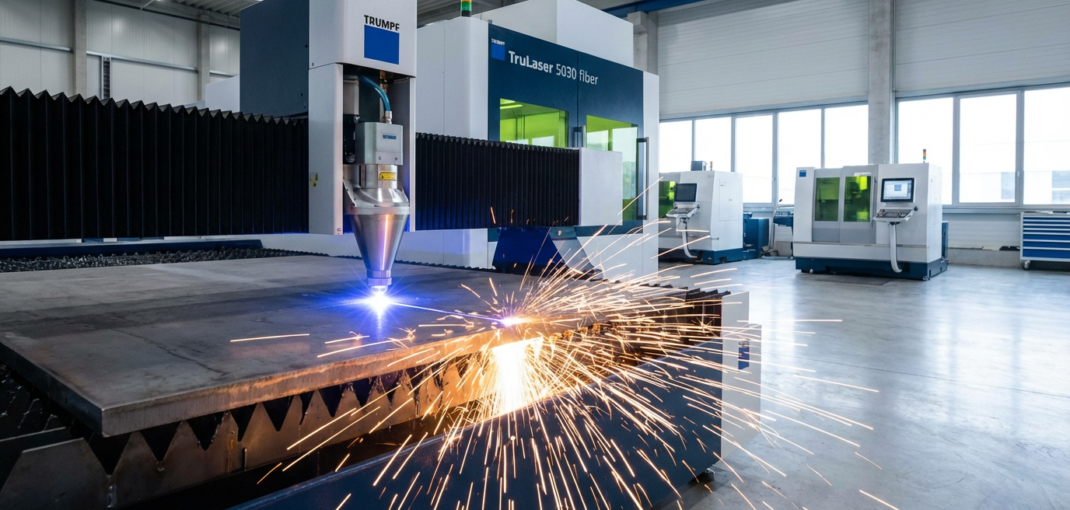
In the world of industrial laser cutting, the choice of assist gas is just as critical as the laser power and cutting speed. Assist gases are injected through the nozzle along with the laser beam to help clear molten material, protect the optics, and influence the chemical reaction on the cutting surface.
Choosing the right gas can significantly impact the quality, speed, and cost of your laser cutting operations. In this article, we’ll break down the three most common gases—Oxygen, Nitrogen, and Compressed Air—and when to use each.
1. Oxygen (O2)
Oxygen is primarily used as an assist gas for cutting carbon steel (mild steel).
How it works:
Oxygen acts as an active gas. When the laser heats the metal, the oxygen reacts with it in an exothermic process (it actually helps “burn” the metal). This reaction adds significant thermal energy to the cutting process, allowing for faster speeds on thicker materials with lower laser power.
Pros:
- Cutting Thick Materials: Ideal for thick carbon steel.
- Lower Laser Power Requirement: The exothermic reaction does some of the work.
- High Speed on Thick Plate: Much faster than nitrogen for thick sections.
Cons:
- Oxidation: Leaves an oxide layer on the cut edge, which usually must be removed before painting or coating.
- Lower Edge Quality: The cut can be rougher compared to nitrogen.
2. Nitrogen (N2)
Nitrogen is an inert gas, meaning it doesn’t react with the metal. It’s the go-to choice for stainless steel, aluminum, and high-quality mild steel cuts.
How it works:
Nitrogen works purely through mechanical force. It blows away the molten metal as quickly as the laser melts it. Because it is inert, there is no combustion or oxidation.
Pros:
- Clean, Bright Edges: No oxide layer; the cut edge is ready for immediate processing.
- Precision: Ideal for fine details and complex geometries.
- No Discoloration: Essential for aesthetic applications like stainless steel appliances.
Cons:
- Higher Operating Cost: Nitrogen is generally more expensive than oxygen and is used at much higher pressures.
- Power Dependent: Requires more laser power since there’s no exothermic boost.
3. Compressed Air
Compressed air is a cost-effective alternative that is gaining popularity with the rise of high-power fiber lasers.
How it works:
Air is approximately 78% nitrogen and 21% oxygen. It provides a “hybrid” effect—some exothermic reaction from the oxygen, but cooled by the nitrogen.
Pros:
- Lowest Cost: If you have a high-quality compressor, the gas cost is essentially zero.
- Speed: Faster than nitrogen on thin-to-medium thickness materials.
- Versatility: Can be used on a wide range of materials.
Cons:
- Edge Quality: Produces a slight oxide layer (yellowish tint).
- Equipment Requirement: Requires a high-pressure compressor with excellent oil and water filtration to protect the laser head.
Summary Table: Which Gas to Use?
| Material | Thickness | Best Gas Choice | Resulting Finish |
|---|---|---|---|
| Mild Steel | < 3mm | Nitrogen or Air | Clean / Slight Oxide |
| Mild Steel | > 3mm | Oxygen | Oxidized (Black) |
| Stainless Steel | Any | Nitrogen | Bright & Clean |
| Aluminum | Any | Nitrogen or Air | Clean / Matte |
| Galvanized Steel | Any | Nitrogen or Air | Clean |
Conclusion
Selecting the right assist gas is a balance between edge quality, speed, and budget. While Oxygen is the king of thick carbon steel, Nitrogen remains the standard for high-end stainless and aluminum work. For those looking to optimize costs on thinner materials, Compressed Air is an increasingly viable option.
At CNC Parts Market, we provide high-quality nozzles and laser parts to ensure your cutting process remains precise, regardless of the gas you choose.